
WE COVER MANY ASPECTS OF DIFFERENT STYLES OF POINTING SUCH AS FLUSH (normally used with historic lime mortars) WEATHER STRUCK, BARREL etc......................
Method:
When raking out old mortar we use 5" angle grinders with 6mm mortar raking diamond blades with DUST extraction units which gives a clean cut to the top and bottom of the joint ready for new mortar application. In some cases power tools are not permitted so hand tools are used such as comb hammers and dogging tools. Before applying new mortar to the brickwork it is wet down using a spray applicator to wash away any existing dust and to give maximum hold to the brickwork. (This operation is not necessary if masonry is to be cleaned prior to pointing as masonry will be raked out before cleaning commences).
How deep should the joints be raked out ???
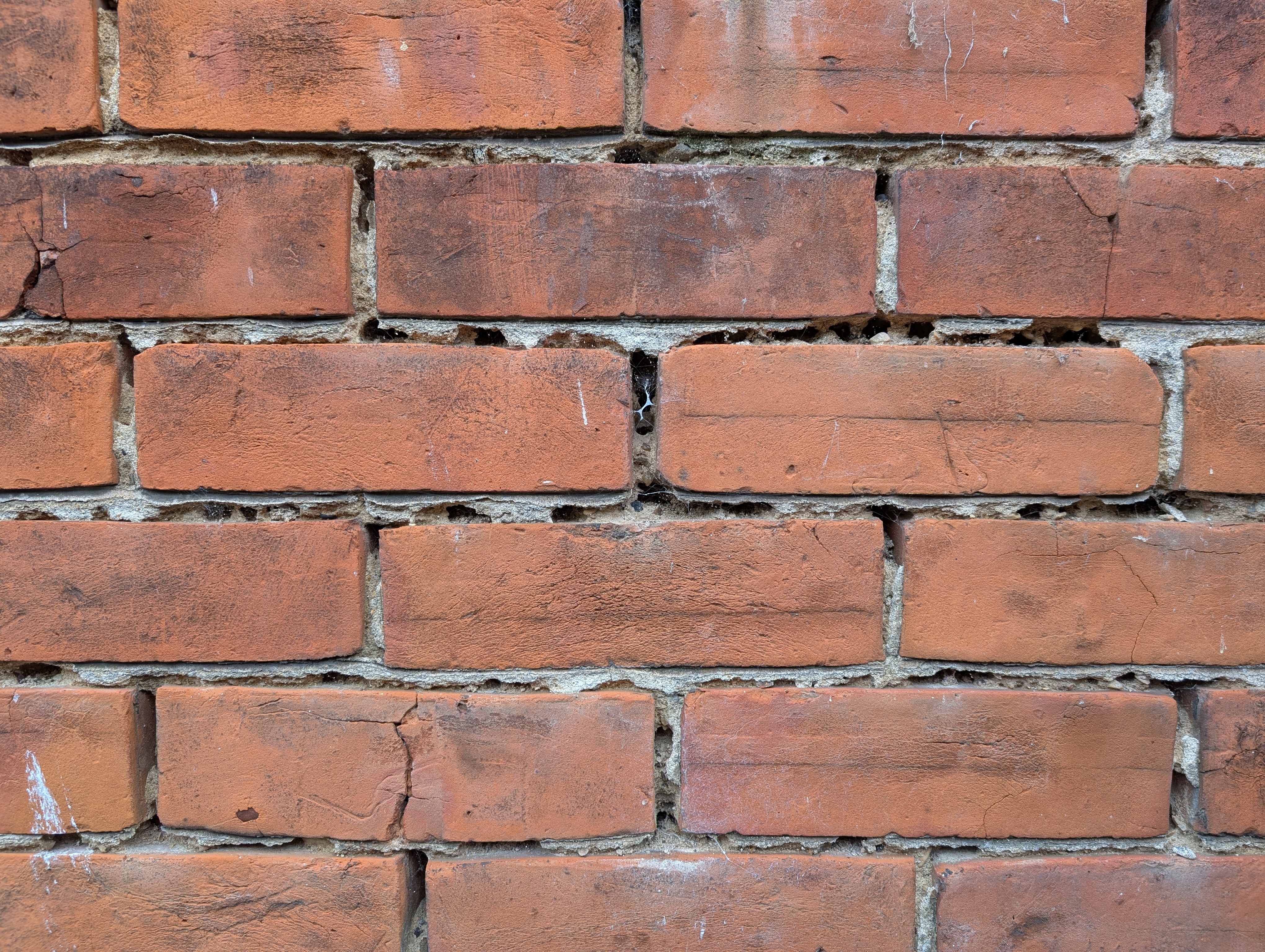
Some builders who do pointing occasionally will only scratch the old mortar back to get a key for the new mortar to stick. THIS IS WRONG if this method does occur over a short time the pointing will blow due to the different weather conditions i.e.: sun, rain & frost and will be a waste of time and money.
When raking out:
We take old mortar out to a depth of 18mm to 20mm as standard unless otherwise instructed.
Applying mortar:
We apply the new mortar manually with hand tools.
We apply vertical joints with a cut down slasher and the horizontal joints with a tray and slasher. This is a skilled operation.
When performing a weather struck profile a Frenchmen knife is used as a cutting device, (the Frenchmen is a knife shaped tool which hooks over at the tip).
Also a rule is used to give a straight cut at the bottom of the joint.
What does the new mortar consist of ?
The new mortar is 2.1.1 (2 soft sand to 1 sharp sand and 1 hydraulic lime 3.5 as standard on lime mortar built properties),
and 6.1.1 (6 sand to 1 cement 1 hydrated lime as standard on sand and cement built properties) or as otherwise instructed.
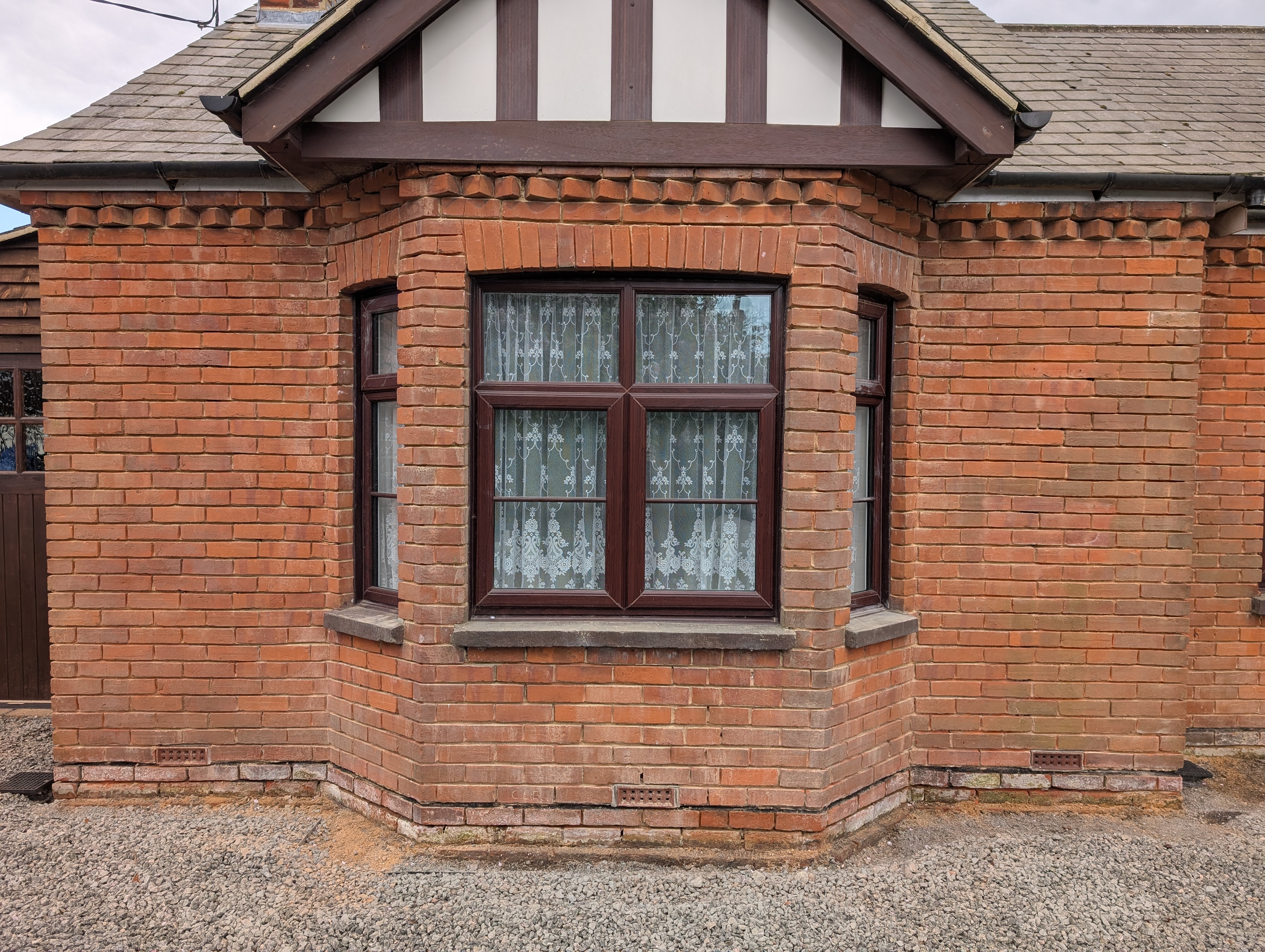
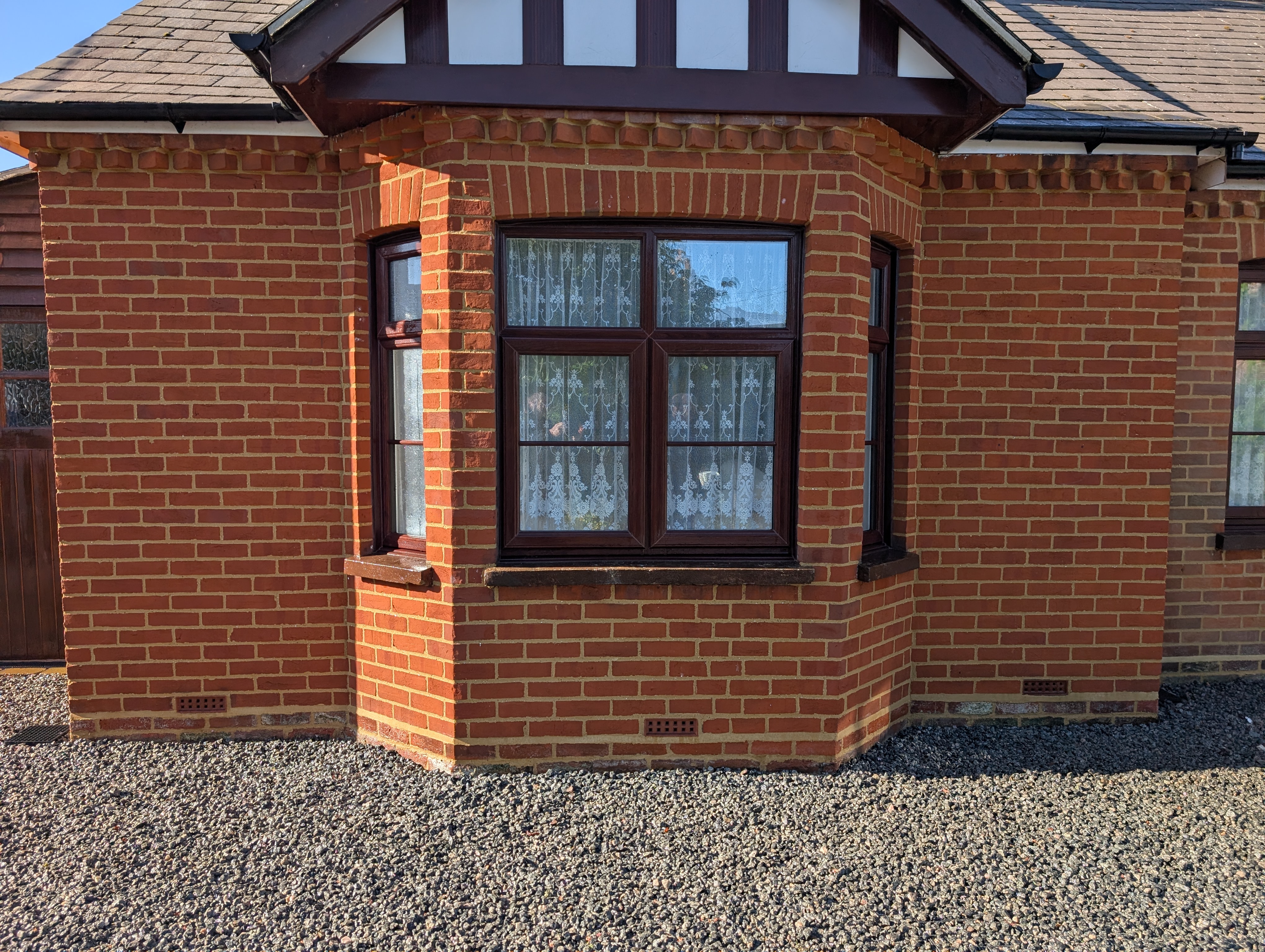
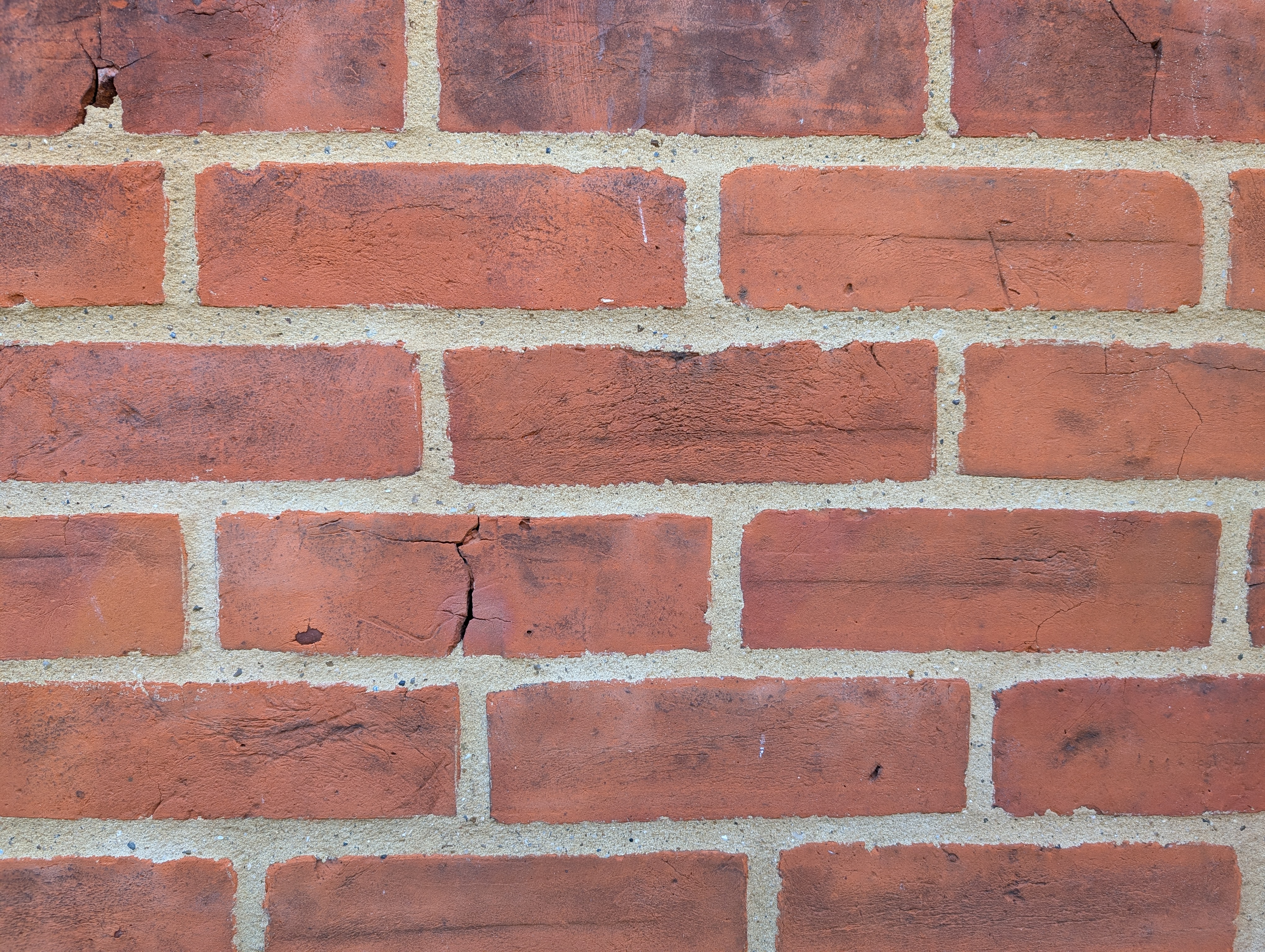
Gallery
Feel free to browse through my gallery images below.
Re-pointing with Lime Mortars
Lime is important to building conservation and has been used over many centuries in historic building.
Lime mortar offers many advantages over modern cement. Lime mortars are softer and more porous than cement-based mortars. Moisture can therefore evaporate through the mortar rather than through the bricks or stones of a building. Moisture levels in the brick or stone walls do not build up, which in turn prevents the build-up of harmful soluble salts in the masonry. These salts are often the cause of deterioration to the fabric of a building. The signs of this are spalling in bricks and stone.
Alternatively hydraulic mortars are sometimes used based on Natural Hydraulic Lime (NHL). The longer a lime putty is left to stand the better. The plasticity of the lime will be improved, therefore improving the bond between a mortar and masonry by resisting suction from the masonry.
It is important to dampen the joints with a water spray so that the masonry does not absorb too much moisture from the mortar. This will prevent the lime mortar drying too quickly and maintain the desired strength of the mortar. The mortar should be as dry as is practical to point with.
The weather and the time of year can also be factors for the type of mortar used. Colour of the mortar is also vital and this is controlled by the type of aggregates
All cavities must be filled so that no pockets of air remain in the joints. This helps to prevent failure in the mortar.
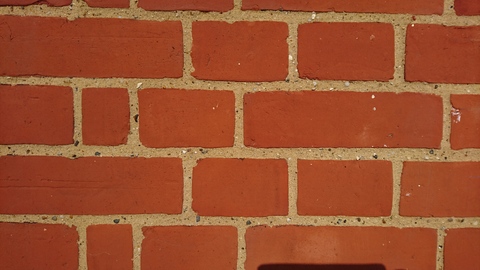
Once the mortar is green but hard, a churn brush is used to compact the mortar into the joint. This strengthens the mortar and the bond with the masonry. It also provides a traditional and natural finish to the joints, highlighting the aggregates in the mortar and making the work look less new and uniform and therefore more interesting.
History of Lime:
Some of the earliest evidence for the use of lime dates back roughly 10,000 years ago. An excavation in Cajenu in Eastern Turkey, revealed a Terrazzo floor that had been laid with lime mortar.
Lime stabilisation of clay was also used about 5,000 years ago in Tibet for the construction of the pyramids of Shersi. In addition, it was also used in conjunction with limestone by the Egyptians in the construction of the pyramids and by the Chinese when they built the Great Wall of China.
By 1,000 B.C., there is evidence that both quick and hydrated lime has been used for building in numerous civilizations, including the Greeks, Egyptians, Romans, Incas, Mayas, Chinese and Mogul Indians.
The earliest ever excavated lime kiln was dated back to 2,400 BC and was found at Khafaje in Mesopotamia, an era which almost marks the beginning of human civilisation.
The Romans employed hydraulic lime and lime pozzolan mixtures in many construction projects, including the Appian Way. They developed the technology of lime burning and the use of mortar, cement and concrete, using lime as the binder. They built the first lime factories and discovered that lime also acts as a chemical reagent. In 350BC Xenophon referred to the use of lime for bleaching linen. Almost all of the Mediterranean peoples were familiar with lime as a paint. Lime was also used for tanning leather, and was mixed with organic substances to produce putty and glue.
When the Roman Empire fell, however, the Romans took the majority of their technology with them (including the burning of stone) and as a result, the Saxons who followed tended to use large amounts of timber for construction, meaning there was a significant period of time when stones/rocks/lime were rarely used. Lime was finally re-introduced when the Normans arrived and used lime for the construction of a number of religious buildings.
In 1824 Portland cement was established and soon dominated the construction market, slowly edging out the use of lime. The use of lime in building and construction is now widely recognised to give important benefits in flexibility, breathability and overall sustainability of the building and its use is back in vogue for both building restoration and new build. Importance of Lime
Hydraulic lime is a useful building material for the following reasons:
It has a low modulus of elasticity.
There is no need for expansion (movement) joints.
It allows buildings to "breathe", and does not trap moisture in the walls.
It has a lower firing temperature than Portland cement, and is thus less polluting.
Stone and brickwork bonded with lime is easier to re-use.
Lime acts sacrificially in that it is weaker and breaks down more readily than the masonry, thus saving weaker stone such as sandstone and limestone from the harmful effects of temperature expansion and mortar freeze.
It is less dense than cement, thus less cold bridging.
Lime re-absorbs the carbon dioxide (CO2) emitted by its calcination (firing), thus partially offsetting the large amount emitted during its manufacture. The more hydraulic a lime, the less CO2 is reabsorbed during set, for example, 50% of CO2 is reabsorbed by NHL 3.5 during the set, compared to 100% of CO2 being reabsorbed by pure calcium hydroxide (fat lime putty).
Contact Form
If you wish to contact us, please use the contact form below and we will get back to you as soon as possible.